The Honest Answer Is “When the Route Narrows”
A fixed schedule is attractive because it sounds simple. The gutter does not know the date. It responds to the trees above it, the wind across the roof, the storms that moved debris, its guard surface, and the shape of its outlets. Two nearby properties can need different attention because their rooflines collect material differently.
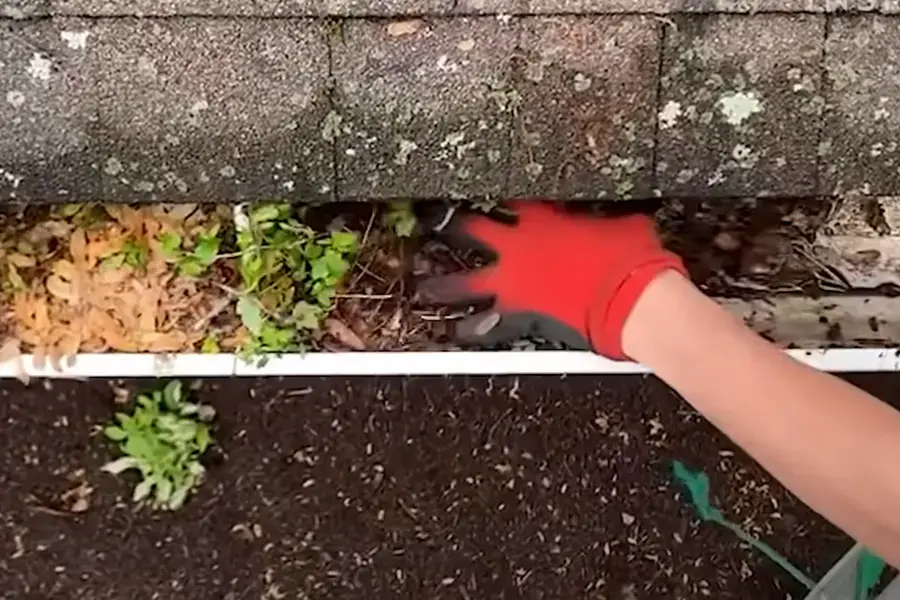
The purpose of an inspection is to decide whether cleaning is needed, not to justify cleaning automatically. If channels are open, outlets are visible, and downspouts discharge normally, waiting is sensible. If a shallow mat blocks a throat or screen, the need exists even if the previous visit was recent.
Use Tree Debris as One Trigger
Ponderosa needles can arrive throughout the year and weave into a thatch. Broad leaves and cottonwood material have their own drop pattern. A home under substantial tree cover should be checked after meaningful material movement, while a property with little overhead debris may go longer.
Look at the location, not only the amount. A long run with a scattering of needles may still flow. A small bundle directly over an outlet can stop it. Guard surfaces also count; debris bridging the top can divert water even when the channel below is clean.
Let Storm Events Add a Check
Hail and strong wind can create a debris load outside the usual seasonal cycle. Hail shreds leaves and may loosen roof granules. Wind redistributes dry material into corners and valleys. A post-event ground check is useful because it responds to the thing that changed conditions.
The check does not need to become a climb. Compare downspout discharge during the next safe rain, look for new spill marks, and photograph the edge from below after weather clears. Stay off roofing after hail and refer roof-condition questions to a roofing professional.
Summer monsoon downpours are also performance tests. Light rain may pass a partial restriction, while a forceful cell exposes it. Overflow is a reason to investigate, but its location matters. Spill over a quiet outlet suggests debris; overshoot at a valley may involve concentrated runoff; leakage behind the gutter may be mechanical.
Add a Cold-Weather Check When Debris Holds Water
Wet spring snow followed by sun and cold nights creates a freeze–thaw sequence. Debris retains meltwater, giving it a place to refreeze around seams and fasteners. Clearing a known restriction before that cycle can reduce avoidable stress.
Do not clean frozen gutters. Wait for ice to release and surfaces to dry. Chipping, pulling, or improvised heat can damage components and create falling hazards. Once the channel is visible, standing water in a clean run may point toward gutter repair rather than more cleaning.
A Simple Property-Specific Rhythm
Create a short observation record instead of guessing an interval:
- Note the trees nearest each roof edge.
- Check from the ground after their main debris movements.
- Add a check after significant hail, wind, or observed overflow.
- Watch discharge from a protected location during rain.
- Record when cleaning was actually needed and what caused the blockage.
After a few cycles, the property develops its own pattern. One side may require attention while the other stays open. A short lower run may be safely visible, while an upper edge needs professional inspection. Service can be targeted to the areas that changed.
Guards Change Frequency, Not the Need to Look
Guards can reduce material inside the channel. They can also collect it on the surface, and fine debris may still enter. Inspection remains necessary after pine drop and severe weather. The relevant question becomes whether the surface passes water and whether outlets remain accessible.
If guards require almost as much safe access as an open gutter, their value may be limited. If they noticeably reduce channel loading on a difficult run, they may lengthen the time between full cleanings. Avoid any schedule based on a maintenance-free promise.
Clean Only When Evidence Supports It
Colorado Springs gutters need attention often enough to preserve an open route and no more. Tie the decision to debris, water behavior, and upcoming freeze conditions. Use the gutter cleaning page to understand the work, or call (719) 628-7121 for a free quote when your inspection shows a problem.