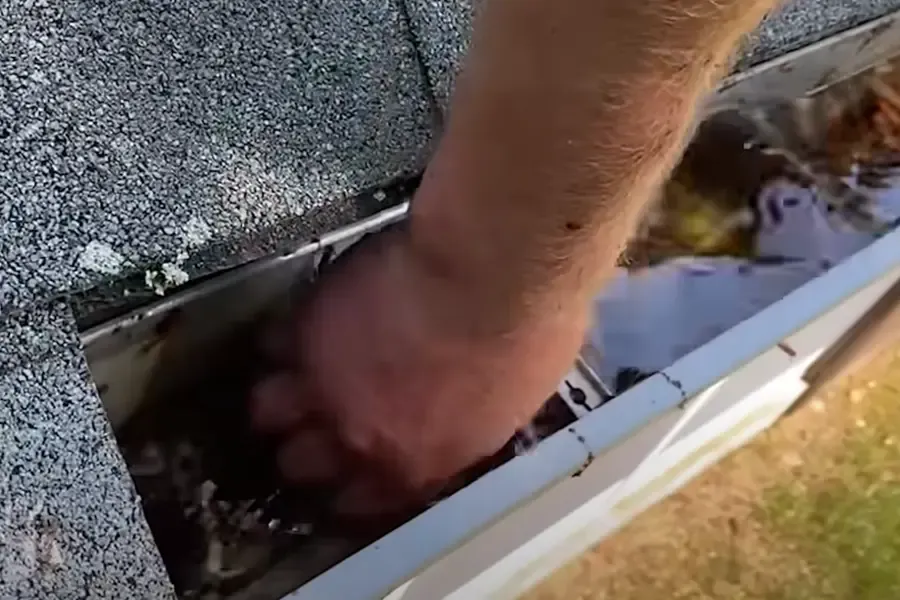
Cleaning That Follows the Debris
Gutter cleaning is mechanical work with a simple objective: remove material that interrupts the path from roof edge to discharge. In Colorado Springs, that material is often more complicated than a layer of broad leaves. Ponderosa needles overlap into a springy mat, cottonwood material catches inside it, and windblown grit settles underneath. Hail can add shredded vegetation and loose roof granules to the mix.
A channel may look open at one end and still be restricted at the outlet. That is why the downspout throat matters as much as the visible run. Pushing debris toward the opening can make the hidden part worse; removing it from the channel is the more useful approach.
What the Service Should Address
The scope depends on access and the observed condition, but a cleaning plan should account for open gutter runs, corners, end caps, outlet openings, and the reachable parts of downspouts. Collected debris should come out of the system instead of being washed into landscaping or forced into an elbow.
Where conditions allow, controlled water can help show whether the route drains and whether a seam drips. Water remaining in an otherwise clean section may indicate a pitch issue. Overflow that begins at a roof valley may point to concentrated runoff rather than a clog alone. Those observations belong in a separate repair conversation; they should not be hidden under the word “cleaning.”
When to Check the Gutters
Use events as triggers. Check after a meaningful pine or leaf drop, after hail or strong wind moves material across the roof, before wet debris is likely to freeze, and whenever a monsoon downpour reveals overflow. A ground-level look at discharge and spill marks can provide useful evidence without climbing.
Do not assume every seasonal check must become a paid cleaning. If the channels are open, the outlets are clear, and runoff is moving normally, waiting is reasonable. Properties beneath pines will often change faster than exposed lots, so the right interval belongs to the building rather than a generic calendar.
Three Common Questions
When should Colorado Springs gutters be checked?
Look after major tree debris, hail, strong wind, or observed overflow, and before retained moisture is likely to refreeze. Inspect first; clean when material is narrowing the route.
Why do pine needles cause stubborn clogs?
Their shape lets them cross and weave. The mat bridges openings, catches smaller particles, and can block a downspout throat even when part of the gutter appears clear.
What shows that water is not moving correctly?
Overflow, a wet line behind the gutter, little discharge from one downspout, or standing water after the storm all deserve a closer look. The location of the symptom helps identify the next step.
Request a Cleaning Quote
Share the building height, nearby trees, last known cleaning, and the point where water spills. A ground-level photo can help. For a free quote, call (719) 628-7121 or use the form above.
Remove the Pine Mat at the Outlet
Ponderosa needles can bridge a screen and weave into a dense layer with oak or cottonwood debris. Clearing only the visible top leaves the outlet vulnerable. A Colorado Springs visit should trace the channel into accessible downspout openings and collect removed material instead of pushing it onto the property. After the next storm, observe discharge from grade. Hail fragments or shingle granules that appear again may justify a separate roof-condition check.