Step One: Define the Problem Before Access
A useful visit starts with a conversation and a ground-level walk. Where did water spill? Which downspout seemed quiet? Was the change noticed after pine drop, hail, wind, wet snow, or a monsoon cell? How many stories are involved, and what does the ground beneath the trouble spot look like?
These questions shape both safety and scope. A straightforward debris removal above a level driveway differs from a short run above sloped landscaping. A seam leak differs from a full outlet. If the gutter appears open and the symptoms point elsewhere, cleaning should not be used as a catch-all answer.
Step Two: Review Access and Weather
Before a ladder moves, check firm placement, roof pitch, nearby lines, branches, lower roofs, windows, and obstacles. Wind, wet surfaces, ice, intense roof heat, or a building storm can postpone the work. The safe decision belongs to conditions at the property, not only the forecast read earlier.
No visit should require a homeowner to climb for photos or assist at the roof edge. Information from the ground is enough to plan. If roof access is not appropriate, the scope needs a different approach or another time.
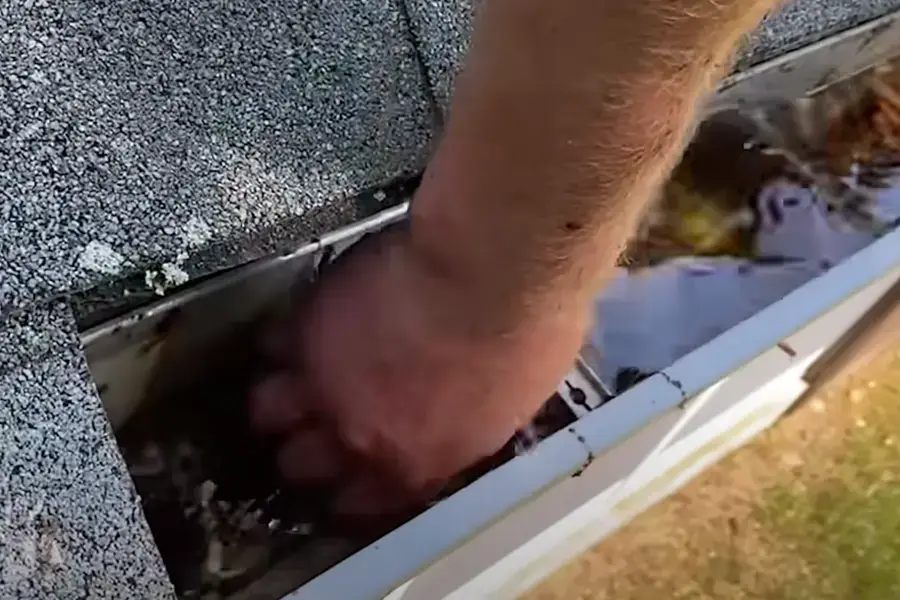
Step Three: Remove Debris From the Channel
Material is lifted out in controlled sections. Ponderosa needles often come away as a woven mat. Leaves may be wet and plastered to the bottom. Grit and small fragments remain below the obvious layer. The objective is to expose the channel and keep bundles away from downspout openings.
Collected debris should leave the system rather than being forced into elbows or dropped into landscaping. The method must respect the gutter material and roof edge. Aggressive scraping or leaning on the gutter can damage components that were not the original problem.
Corners, end caps, and guard transitions receive attention because material collects unevenly. A long clean-looking run does not prove that the short section over an outlet is open.
Step Four: Address the Outlet and Downspout Route
The downspout throat is the pinch point between a broad channel and a smaller route. Clear material at the opening before considering water. Reachable elbows and transitions may need their own check. If the downspout enters a below-grade connection, that hidden route should be understood rather than treated as an unlimited drain.
Controlled water can help verify discharge when temperatures and conditions allow. Water should enter the outlet and appear where expected. A backup below the gutter suggests a different blockage. A hose should not be used to ram unknown debris into a concealed section.
Step Five: Note Mechanical Conditions
With debris removed, the gutter itself becomes visible. Standing water may indicate pitch. Dripping at a seam may show separated sealant or movement. A loose section, displaced elbow, or open end cap belongs on a gutter repair list.
An observation is not pressure for extra work. A dent that does not affect flow may be cosmetic. A localized repair may make more sense than replacement. Roof granules found after hail should be documented for a roofing professional, not used for a gutter diagnosis.
Step Six: Explain What Changed
The useful closeout answers a few direct questions: What was removed? Was the outlet open? Did water reach discharge? Is any separate repair worth considering? Are guards collecting surface debris? Is there loose roof material likely to refill the channel?
Photos can help show inaccessible areas if they are part of the agreed visit, but the essential result is clear information. The homeowner should be able to connect the original symptom with the work performed.
What a Cleaning Does Not Promise
Gutter cleaning restores a debris-blocked route. It does not control every intense downpour, diagnose roofing, repair fascia, or eliminate future tree drop. Guards may reduce some material but do not erase maintenance. A clean gutter with poor pitch may still hold water until repaired.
If inspection shows the gutter was already open, the right recommendation may be to wait and observe. Honest scope includes the decision not to perform unnecessary cleaning.
For a free quote, call (719) 628-7121. Share the height, debris type, and exact place where runoff or leakage appears.